ClothLink Procurement / Viscose

Viscose fiber wholesale for a defined conversion route

Translate the finished textile requirement into the raw-material checks that matter to your process. The routes below are procurement scenarios, not statements that a listed fiber has passed an application test.

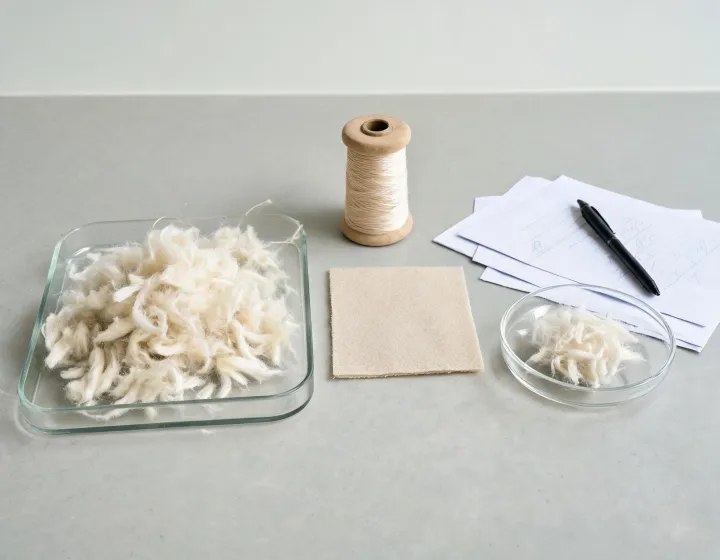
Viscose staple fiber prepared alongside small unbranded spinning and nonwoven trial samples

Application requirements change the review

Spun yarn programs

For a spinning trial, identify the machine route, desired yarn count system, blend composition and target yarn properties. Request fiber linear density, cut length and supplier-declared quality tolerances. Trial the proposed fiber rather than accepting a general statement about spinnability. Fiber variation can affect processing, so record the sample identity and machine settings used for the evaluation.

Blended apparel textiles

When the downstream program specifies hand feel, drape or dye response, separate those fabric goals from the fiber order. Record the planned blend and whether yarn, greige fabric and finished fabric are separate approvals. GSM, usable width, shrinkage and colorfastness belong on the applicable downstream sample plan; raw-fiber data cannot by itself establish those finished-textile outcomes.

Nonwoven conversion inquiries

State the web-formation process, bonding route and end-use conditions. Agree which fiber properties will be measured, how the test specimen is conditioned and which acceptance thresholds apply. Absorbency or hygiene suitability requires application-specific evaluation; a fiber name, sample appearance or supplier certificate alone does not establish suitability for a regulated finished product.

Stock fit versus development fit

An existing article may shorten the sampling path if fineness, cut length and package form fit the process. A developed article may address a tighter requirement while adding minimum quantities and approval work. Compare those routes using the same trial conditions and required timing rather than comparing descriptions alone.

Fiber price versus accepted output

Consider the quoted kg basis, packaging, freight and testing charges together with the intended production evaluation. Do not infer a yield improvement from a price difference. Define what the buyer will measure during the trial before treating two proposals as equivalent.

Brochure versus sample-linked result

Use the ASTM textile standards index to frame method questions, not to imply a test result. Ask the laboratory and supplier to identify method edition, specimen, conditioning, date and lot reference. The acceptable method and threshold remain purchase-specific.

Describe the process before selecting the fiber

Send the conversion route, required quantity, destination and sample stage. If your project specifies a finished fabric, include construction, weight, usable width, finish and performance basis as separate downstream requirements.

Business sourcing support

FREE sourcing support · up to 3%

Eligibility applies to qualified business buyers and is confirmed after we review your product, quantity, destination, and sourcing requirements.

Submit the product, quantity and destination for review of the applicable support scope.

Submit your brief